
Searching Wabasha County Criminal Dockets
Criminal filings in Wabasha County belong to the Wabasha County District Court. For remote searching, the quickest route is Minnesota Court Records Online, or MCRO. Accept the terms first. Then pick Case Number, Citation Number, or Name. Choose the Criminal category. Set Court Locations to Wabasha when you know the venue. Nothing beats a complete case number. Name results can pull in similar names and can leave out some pending no-conviction matters.
MCRO is a lookup tool, not the certifying office. The Register of Actions is the court's own chronological record of case events. Need a certified order, judgment, or word on a current setting? Use the case number. Contact Wabasha County District Court Administration directly rather than treating a search result as final proof.
- Open MCRO and accept the terms of use.
- Select Criminal and, if appropriate, filter the county list to Wabasha.
- Enter a complete case or citation number, or use the Person path with last and first name.
- Open the matching Case Details page and compare the case number, court location, filed date, and status.
- Read Case Events, Hearings, Dispositions, and Financial Information before seeking an official copy.
Note: A case-number search may surface a public matter that a name search misses, because MCRO applies special no-conviction and access rules.
Wabasha Criminal MCRO Filters
MCRO splits its search paths into Person, Business, Case Number, Citation Number, and Attorney. A person search requires a last name and a first name. A middle name helps narrow wide results. You can tweak exact spelling, punctuation variants, a permitted trailing wildcard, and Sounds Like. Sounds Like can't pair with a wildcard, though. Date Filed, Date of Birth, the Criminal category, and Active or Inactive status are refinements. They are not replacements for a case number.
Narrow searching pays off, as the court's own MCRO materials explain. Results cap at 200 and default to newest first. Flip to oldest-first when you're reconstructing a sequence. View Case Details opens the county, event, hearing, and disposition fields. Those fields pinpoint the right record.
| MCRO field | Use for a Wabasha criminal search | Key limit |
|---|---|---|
| Case Number | Known MNCIS case | Use a complete number with no spaces. |
| Citation Number | Citation-based criminal matter | Dashes and leading zeros may be omitted. |
| Person | Name-only search | Last and first name are required. |
| Court Locations | Wabasha venue filter | Statewide remains useful if venue is uncertain. |
Inside a Wabasha County Criminal Docket
Case Details can display the case number, title, type, filed date, court location, judicial officer, status, citation number, flags, and related cases. Party Information lists public role and attorney fields. A criminal record may also carry separate sections for Charges, Warrants, Interim Conditions, Case Assignment, Case Events, Hearings, Dispositions, Bond/Bail Activity, and Financial Information. One caution applies. An event line can name a document without that document being available remotely.
| Case number | The MNCIS identifier used to confirm the Wabasha file, such as XX-CR-XXXX in illustrative form. |
|---|---|
| Case Events | The Register of Actions entries, usually dated procedural events and document indexes. |
| Hearings | Past and scheduled appearances, with available time, courtroom, officer, and setting information. |
| Charges | Public charge history and classification, which may include amendments. |
| Disposition | The recorded outcome field; read the event or order for its precise effect. |
| Financial Information | Displayed fines, fees, payments, credits, and balance information when available. |
The official MCRO case-detail handout is the source for these field groups.
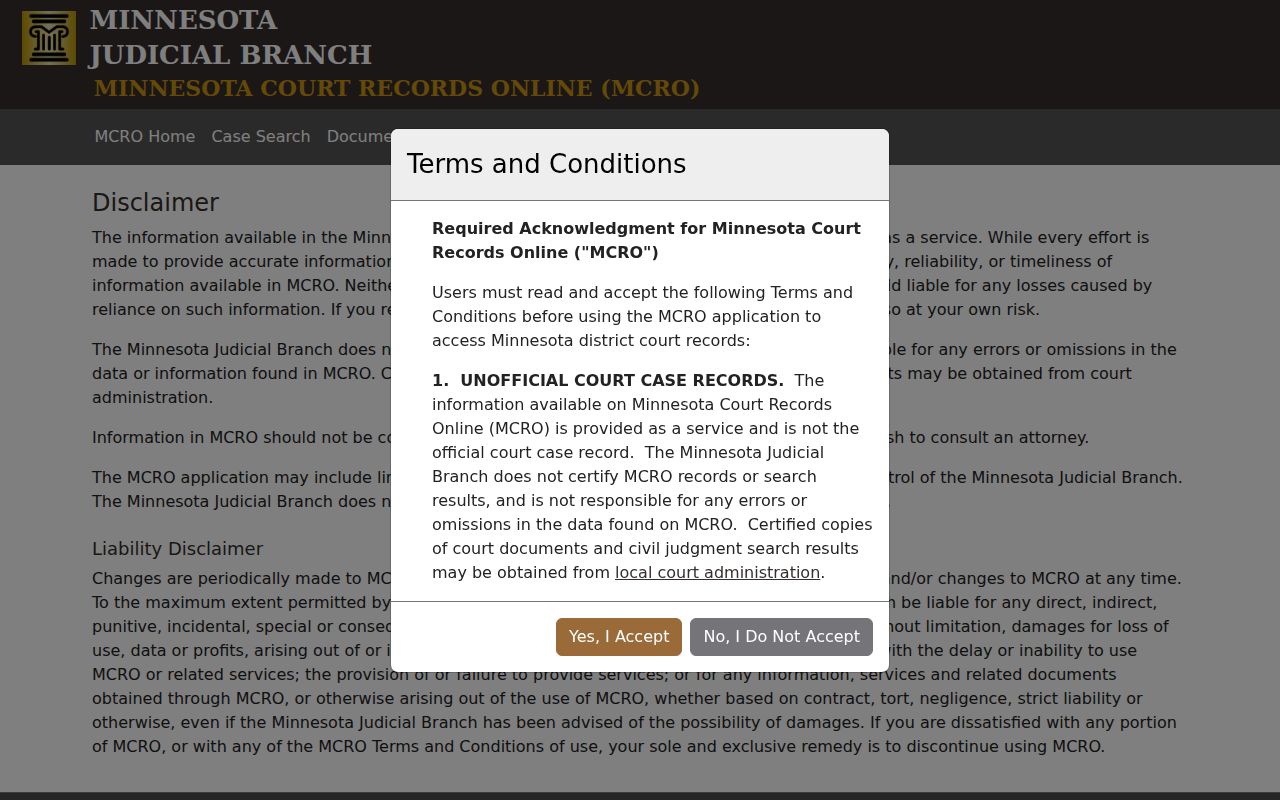
The public-access warning captures the key point: a visible Wabasha County criminal docket records court action, but it is not a complete or certified file.
Wabasha Criminal Calendar Check
A criminal hearing deserves a second check beyond the case record itself. The Wabasha court page links a searchable Weekly Public Court Calendar. It is posted every business day at 7:00 a.m. and updated hourly. MCRO Hearing Search offers another angle. You can search by name, case number, attorney, judicial officer, date, category, and a selected Wabasha location. When a date really matters, compare the public PDF against the case's Hearings section.
The court warns that the PDF leaves out some matters and can change. Printed calendars outside courtrooms and in public lobbies are the freshest source. A missing entry does not prove a cancellation. Citation-based criminal questions go to the traffic line at (800) 657-3611. Other local case questions go to Court Administration at (651) 412-8627.
Note: A calendar listing only shows a scheduled setting. It promises nothing about hearing length, remote attendance, or the final outcome of the Wabasha criminal case.
How a Criminal Case Moves
Every criminal case takes its own path. Still, a Wabasha Register of Actions may document a charging paper, summons or warrant, first appearance or arraignment, bond activity, conditions, plea, motions, orders, settings, continuances, disposition, sentencing, costs, and later review. Wording and order vary with the file. An Active label says nothing about guilt or result. Likewise, an event called plea is not necessarily the sentencing outcome.
Typical record flow: Filing → Arraignment → Pretrial → Plea or Trial → Disposition → Sentencing.
When a continuance appears, read the new hearing entry and the prior one. Terms like "Dismissed," "conviction," "stayed," "probation," and "restitution" should come from the actual docket language or a related public order. Never infer an outcome from an abbreviated event, or from a record's absence in a name search.
Wabasha Criminal Status Terms
Minnesota's local docket term is Register of Actions; MCRO also says Case Events. A disposition records an outcome exactly as the court entered it. A continuance or reset means a setting moved. Bond/Bail Activity covers posting and related activity. It doesn't establish every condition, though. Warrants get their own section. So don't judge present warrant status from one event entry.
- Active / Inactive
- MCRO search and case-status labels, not conclusions about a criminal allegation.
- Case Event
- A dated Register of Actions entry that may carry a description or document index.
- Interim condition
- A court-imposed condition while a matter remains pending.
- Disposition
- The docketed result, which should be read with its order or event text.
The MCRO disclaimer warns that remote information is neither certified nor guaranteed error-free. Court Administration is the local route to a certified record or an explanation of what's available.
Courts That Hold Criminal Dockets
Wabasha County criminal dockets live inside the Minnesota District Court system, the state's trial court. That structure matters for where you search. Minnesota Statutes section 484.01 gives the district court its original jurisdiction, and the Wabasha court lists criminal and traffic matters among the case types it handles. There is no separate county court or local justice court keeping its own criminal docket here.
Appeals work differently. Those records sit with the Minnesota Court of Appeals or Supreme Court, and you search them through P-MACS instead of the Wabasha trial register. A city can issue an administrative citation on its own, but the matter only becomes a court docket once it is filed into the District Court/MNCIS path. City offices cannot run the Wabasha District Court search for you.
The Minnesota public-access rules set what the court can release, and Court Administration is the local office to call with questions.
Wabasha Criminal Records Desk
When MCRO leaves gaps, go to the courthouse. The counter and the public-access terminal there are the stronger local routes for a Wabasha County court docket. Statewide access guidance notes that terminal access can be more complete than what you get remotely. The same legal limits still apply. So ask at the desk. A request for a public Register of Actions, an order, a judgment, or a transcript should state the case number. It should also list the event or document you need, the date range, the copy type, and how to reach you.
Wabasha County District Court Administration
848 17th Street East, Suite 4
Wabasha, MN 55981
(651) 412-8627
Monday through Friday, 8:00 a.m. to 4:30 p.m.
You can also ask for copies by mail under the statewide copy guidance. Parties with a stake in a case may file through Minnesota eFile and eServe. But know what that site is. It handles filing and service, not public docket lookup. The court offers no public fax workflow for this, so call before trying that route.
Sealed Dockets and Public Access
Public access to a Wabasha County criminal docket is real, but it has edges. Some records never show up in a name search, the calendar, or the remote documents. Others appear only as a limited public case shell. The limits bite hardest in certain areas. Domestic-abuse and harassment matters, child-protection material, some juvenile delinquency records, civil-commitment records, and parts of family files all face particular restrictions. Expungement under chapter 609A seals qualifying records from ordinary public view. A sealed docket does not mean no case ever existed.
Key Minnesota access rules: Minn. R. Pub. Access 8 governs inspection, copies, remote access, excluded data, and restricted categories. Minn. R. Pub. Access 4 identifies public and non-public record categories. Minn. Stat. § 13.90 places judicial-record access under Supreme Court rules rather than the ordinary Data Practices Act process.
Juvenile cases in Wabasha County work differently. State law locks down those court records through Minn. Stat. § 260B.163 and Minn. Stat. § 260B.171, which set strict limits on juvenile hearings and files. Court Administration can tell you whether any public portion exists and how to request an order for it. A docket search, whether at a courthouse terminal or online, never unlocks sealed material on its own.
The official juvenile-hearing statute spells out where that access boundary sits.
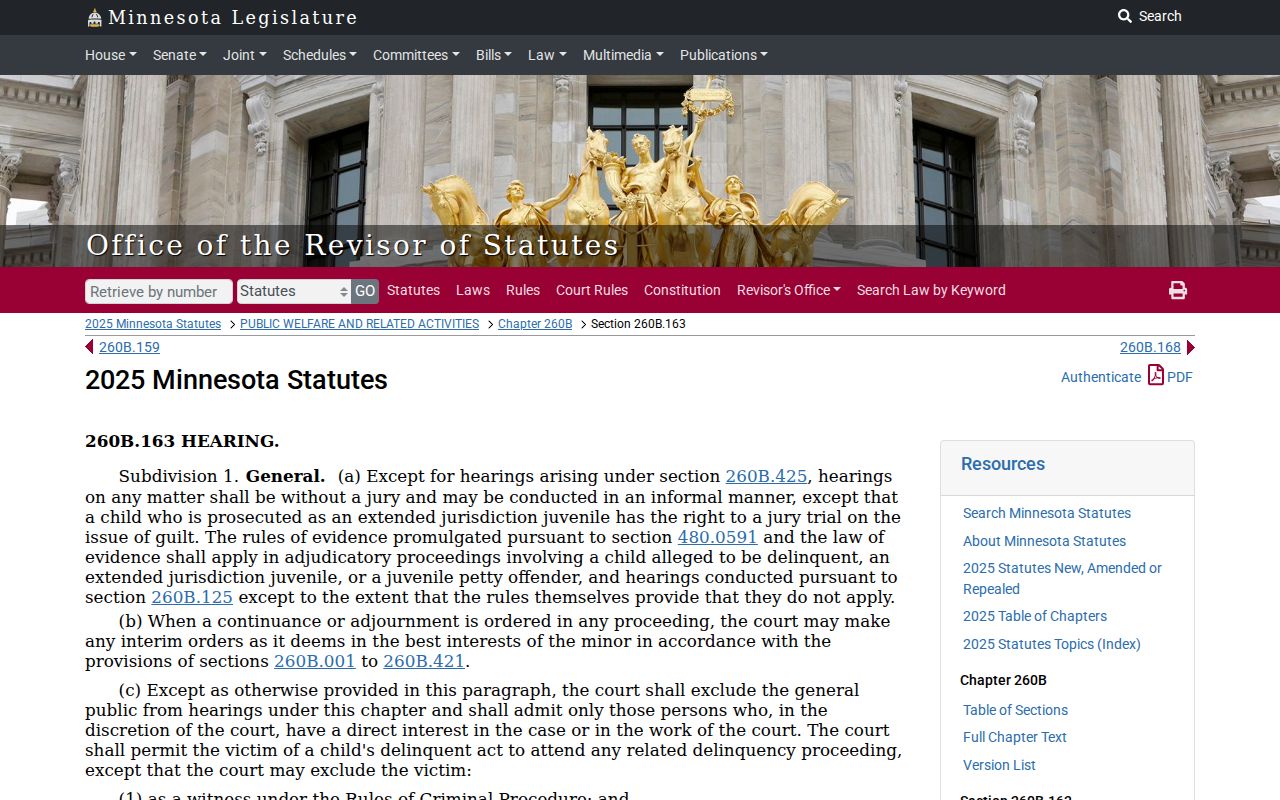
That statute is the reason a Wabasha County criminal docket search should never read a missing juvenile entry as a finding about a person or a case. Absence there means the law closed the door, not that nothing happened.
Wabasha Criminal Remote Limits
MCRO is a strong tool for finding public entries and documents in a Wabasha County criminal docket, but it hides or strips sensitive identifiers and follows case-type limits. A missing document can stem from the filing date, the case category, a sealed status, or the remote-access rules themselves. The courthouse terminal sometimes lets you view an authorized public item that never appears online. Even then, the court's access rules still govern.
Transcripts take a separate path. Use the court reporter route at (651) 412-8633 along with the statewide request form. Certified copies come only from Court Administration. Keep these tasks straight: MCRO search is a free public lookup, while certification, a judgment search, and transcript production are local or court-reporter services that carry fees. The official juvenile-record statute is one reason a local access question may need a case-specific answer.
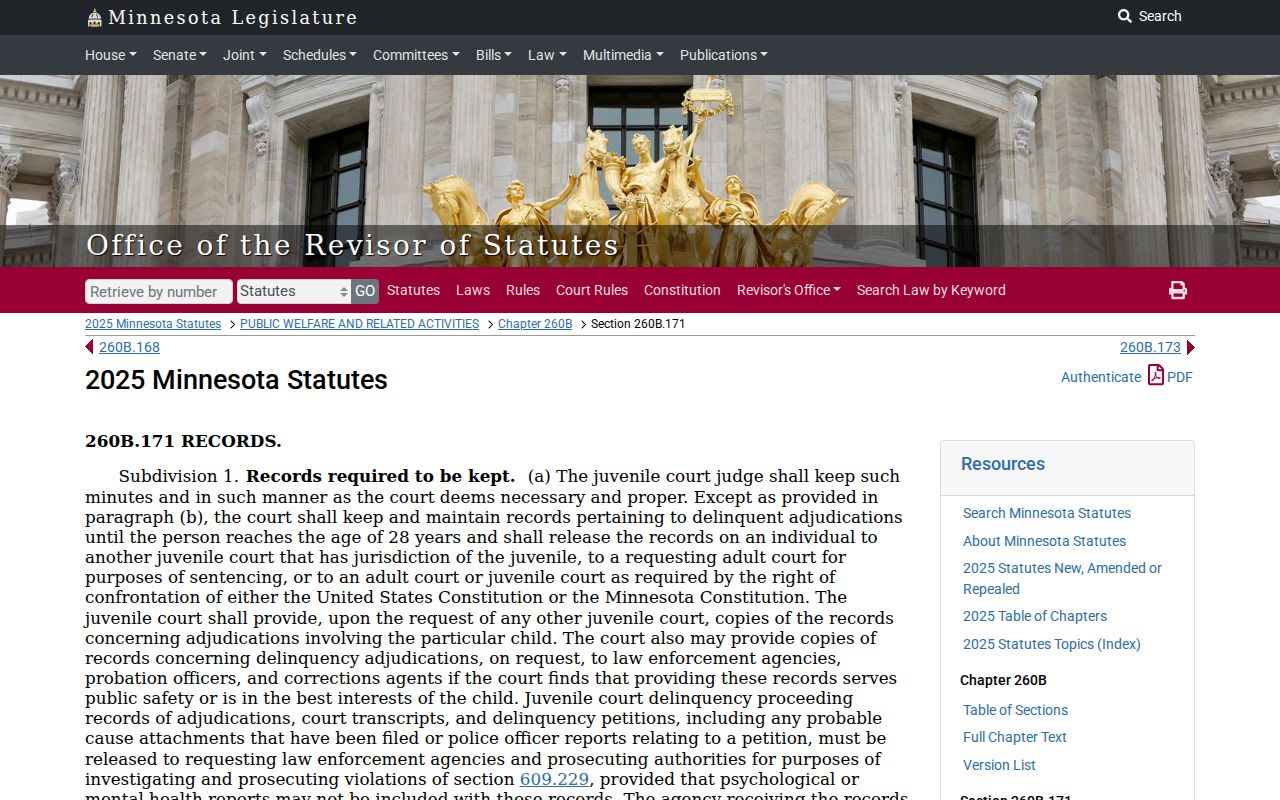
It draws the line. The statute and court rules decide which Wabasha County criminal record stays public and which has limited access. The official Rule 8 page lays out the full remote-access framework.
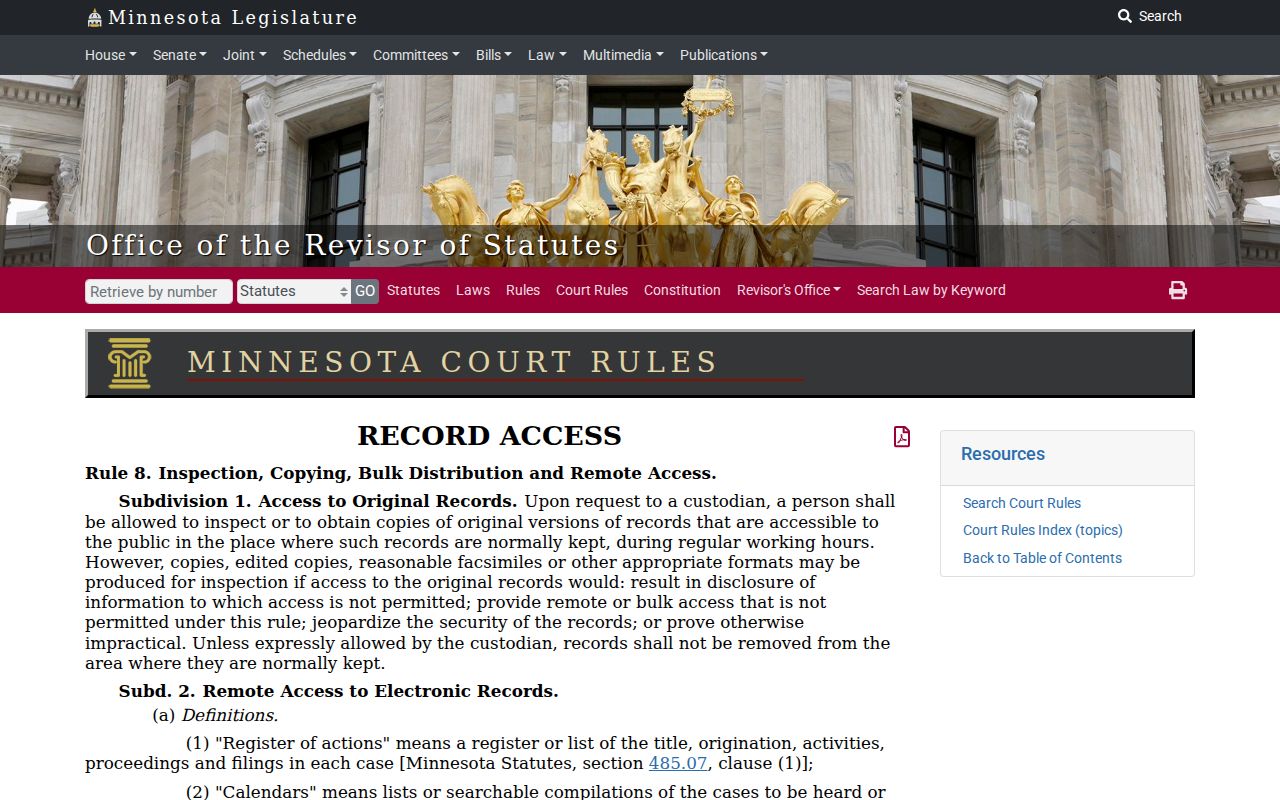
Rule 8 governs what the public can reach in a Wabasha County criminal docket. It sets the framework; it does not promise every court item appears online.