
Searching Wabasha County Civil Dockets
Civil matters here are filed in Wabasha County District Court. That is one courthouse inside Minnesota's unified District Court system. The main tool is MCRO Case Search. Pick Civil under Case Category. Then search by a complete case number, party or business name, attorney, or date filed. When you know the courthouse, choose Wabasha under specific county locations. A full case number is the surest way to pull one civil case out of a pile of same-name results.
MCRO is free for public searching and some document viewing. Limits apply. It will not certify a judgment. It will not guarantee an image for every docket item or replace a request to Court Administration. For a public hearing date, Hearing Search offers another online route. The Wabasha weekly calendar is worth checking beside the case's Hearing section.
- Open MCRO and acknowledge its terms.
- Choose Name, Business, Case Number, or Attorney and select Civil.
- Filter Court Locations to Wabasha when appropriate.
- Verify the case number, court location, filed date, and party roles in Case Details.
- Read Case Events and Hearings, then use Document Search by the confirmed case number for public images.
Wabasha Civil Business Searches
Business searches in MCRO run on their own track. You enter the organization name, not a person's first and last name fields. Where allowed, the interface accepts a trailing wildcard after two characters. Person searches, by contrast, require both last and first name; a middle name, filing date, category, status, or Wabasha location can narrow things down. For a shaky spelling, Sounds Like helps. It cannot be paired with a wildcard.
Results cap at 200 and normally list newest first, with an Oldest First sort and a View Case Details control. Rather than guessing among similarly named parties, refine a broad result until the right civil matter is clear. The record fields in Wabasha County District Court, not any city office, tell you whether you have found the correct case.
| Search path | Useful input | Reason to use it |
|---|---|---|
| Case Number | Complete MNCIS number | Most reliable direct lookup. |
| Business | Business name | Separate civil party path. |
| Person | Last and first name | Starting point when no number is known. |
| Attorney | Name or MN license number | Can narrow a known representation. |
Inside a Wabasha County Civil Docket
Think of the civil Register of Actions as a procedural log. It does not replace the complaint, answer, order, or judgment itself. What it can show runs wide. Case information, party roles, attorney association, events, hearings, disposition, financial information, and public documents all appear. Typical entries include a complaint or petition, service, answer, motion, response, affidavit, notice, order, hearing, continuance, judgment, dismissal, satisfaction, or an appeal-related item. A settlement conference or mediation event is a step, not a final judgment.
| Case Information | Number, type, filed date, location, judicial officer, status, flags, and related cases. |
|---|---|
| Parties | Public plaintiff/petitioner and defendant/respondent role labels and attorney association. |
| Case Events | Chronological Register of Actions entries for filings and court action. |
| Hearings | Available date, time, setting type, courtroom, and officer information. |
| Disposition | A judgment, dismissal, settlement-related event, or other docketed outcome. |
| Financial Information | Court costs, judgment, payment, satisfaction, or balance fields when available. |
The MCRO information page describes the remote court-record path.
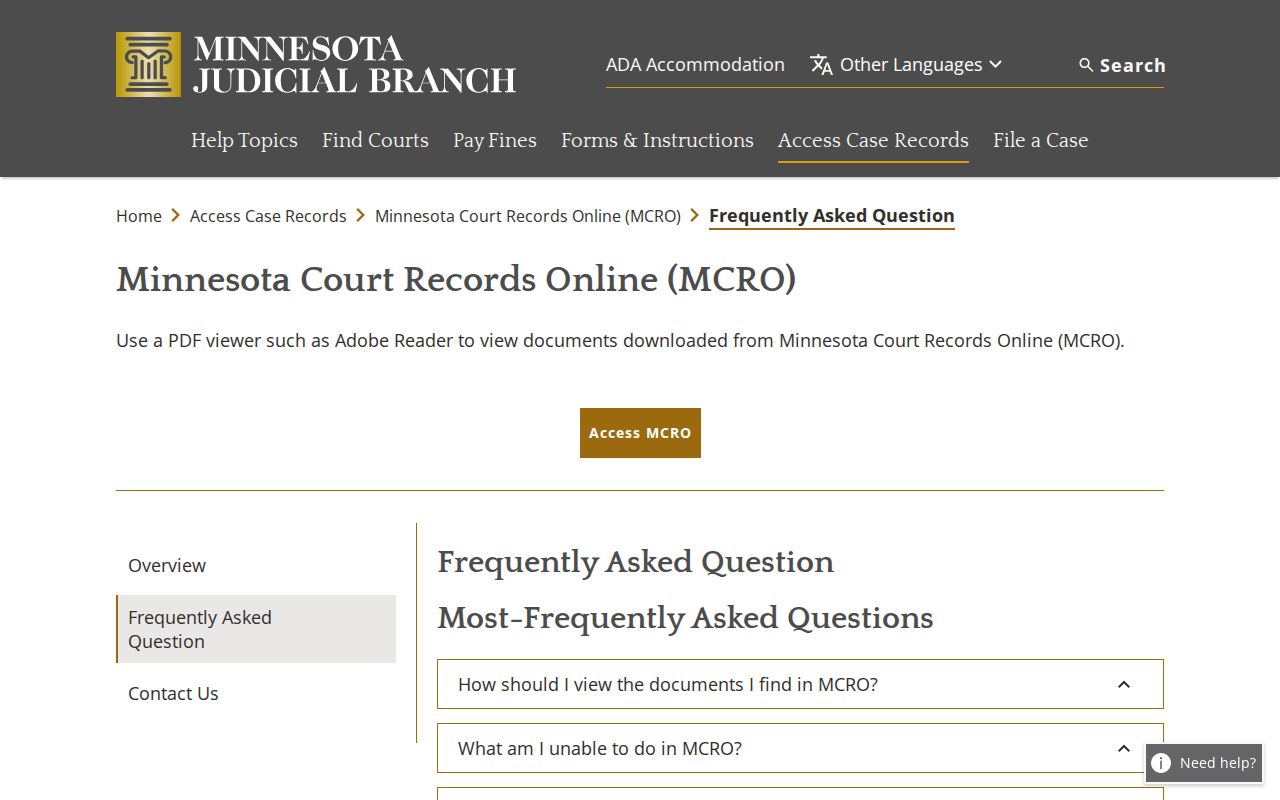
The official material points one way. Use a Wabasha civil docket result to find the case record, then confirm the record you need with the court itself.
Wabasha Civil Documents After 2015
MCRO's published access scope draws a clear line. Public documents in major and minor criminal and civil case types filed on or after July 1, 2015 are broadly available remotely, subject to the access rules. Earlier public materials get a narrower remote set, mainly judgments, orders, opinions, and court notices. Document Search needs a complete case number and returns only publicly accessible images.
Family records deserve extra care. Party-submitted family documents are restricted from remote access, so a family dispute is not an ordinary civil document search just because parties are involved. A missing image can trace to filing date, case type, confidentiality, or an access limit. The courthouse public-access terminal may display an authorized public record that never appears remotely. Even so, it is not unrestricted access either.
The official Rule 3 source identifies court-record custodians.
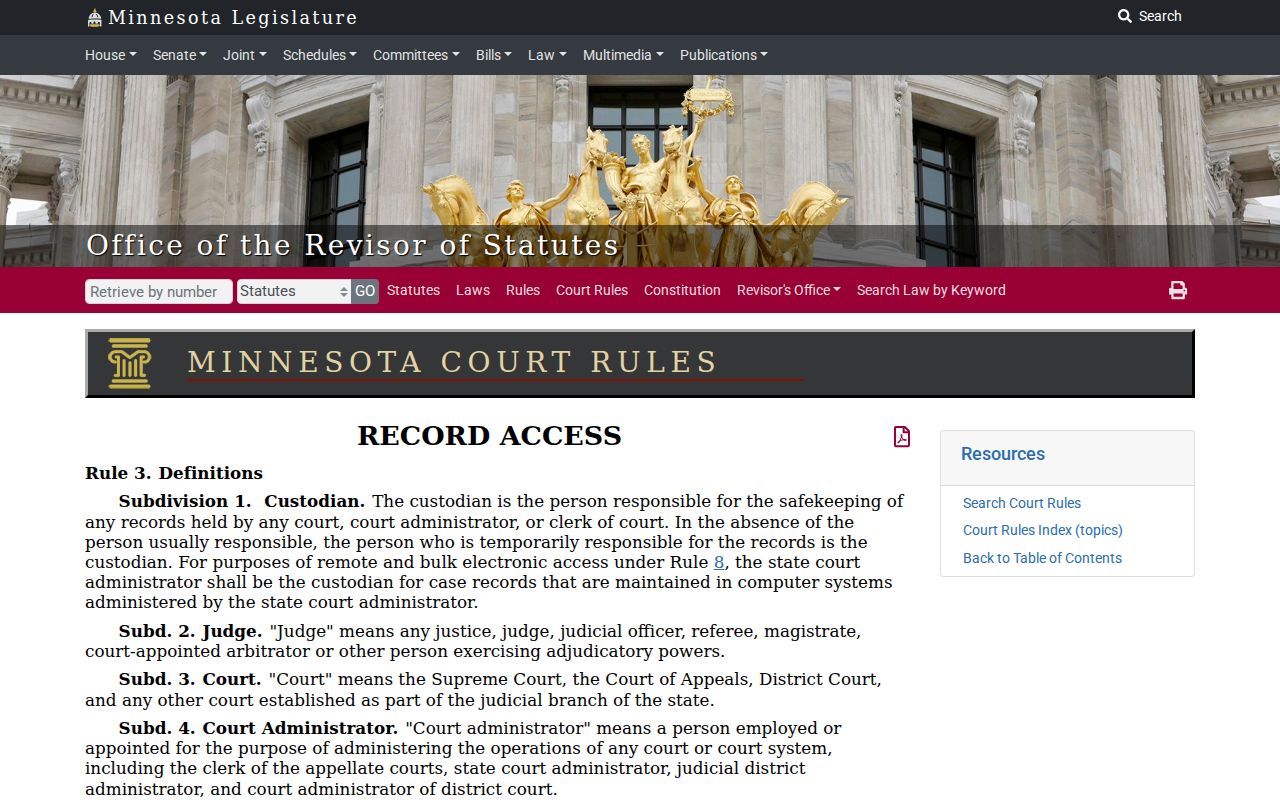
The rule points to a practical answer. Wabasha Court Administration, not a city civil clerk, is the local custodian-facing route for a District Court record.
Civil Case Types on the Docket
Wabasha County District Court holds original jurisdiction over civil matters. Filings can span contract, tort, property, conciliation, probate-related, or other public civil case types within the court's authority. MCRO's category and case-type fields describe a matter far better than a broad "civil" label. Not everything a city, county department, or federal court handles belongs on the Wabasha civil docket.
Party-role labels help a reader see a case's posture. Plaintiff and defendant are the common civil labels. Petitioners and respondents show up in other proceedings. The court record may carry entries for service, pleadings, motion practice, orders, and judgment. Each entry marks a step. It does not carry the full text or legal meaning of every document.
Note: Read a civil disposition or satisfaction entry in context. Its scope and effect depend on the actual Wabasha case record.
Wabasha Civil Judgment Records
A civil docket can carry money facts: a judgment, a payment, a balance, or a satisfaction. Minnesota runs a dedicated tool for this. The MCRO Judgment Search lets you look up a person or business by name, docketed date, status, and location, either statewide or narrowed to selected counties. The status control exists, but the interface does not spell out every value choice. So treat status filtering with care.
A remote screen result is one thing. An official transcript of judgment or certified judgment is another. Only Wabasha Court Administration issues those. The Wabasha fee schedule prices a certified judgment search at $5 per name and a transcript of judgment at $40. One figure on the fee-calculation display does not match up. Confirm with the county filter before you pay anything.
Where do the numbers come from? The Minnesota court fee hub runs the fee-search system that publishes them.
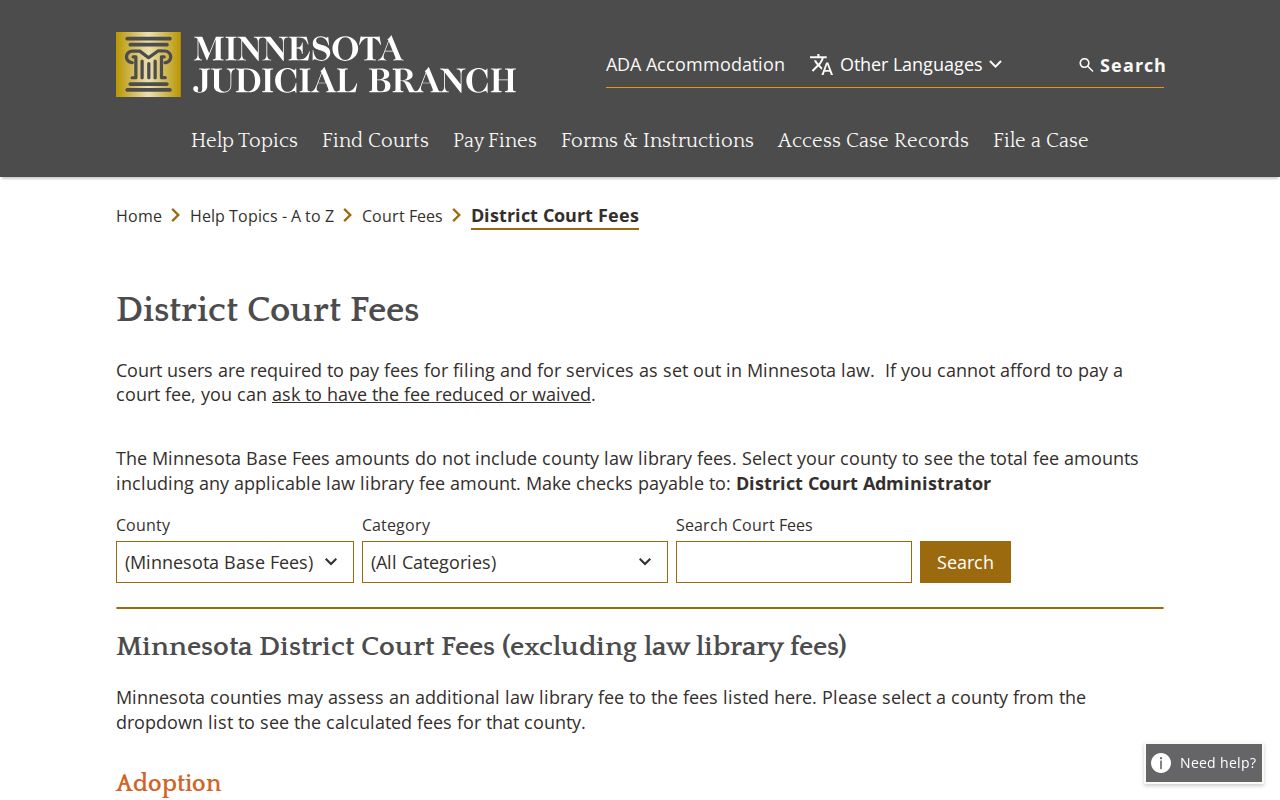
Set the fee lookup to Wabasha County before trusting any amount. The county-filtered result is what controls the local copy and certification charges for Wabasha civil records.
Civil Docket Settings and Hearings
Checking a Wabasha civil hearing takes two sources side by side. One is the Hearings section of the case record. The other is the current public calendar. MCRO Hearing Search takes a name, case number, attorney, judicial officer, an exact date or a range, a category, and a Wabasha location. The local weekly PDF posts at 7:00 a.m. on business days. It also gets hourly updates. Even so, it skips some matters, and settings can shift.
Labels tell you the purpose. A setting may be a motion hearing, status conference, settlement conference, trial, or review. If you see a continuance or reset, the date moved; nothing was settled. For the freshest listing, the court points to its printed calendars. You can find them outside courtrooms and in public lobbies. A known case missing from the PDF is a red flag. So is a clash with MCRO. Either one means a call to Court Administration at (651) 412-8627.
Wabasha Civil Copy Choices
Copies come in tiers. MCRO document downloads are free right now. The Wabasha fee page prices plain, uncertified copies at $0. Need something official? Court Administration provides certified copies. The Wabasha-filtered fee schedule lists $14 for a certified civil or criminal instrument. It lists $14 for a certified imaged or e-filed printout too. An exemplified and certified copy runs $28, while exemplified and uncertified is $14.
Most in-person copying finishes the same day unless the file sits offsite. A mail request should name the case number. Add the document or event date, the copy type, delivery details, and payment when required. For certified or exemplified work, pay by check or money order to District Court Administrator. Do this unless the court directs otherwise. Parties can file through Minnesota eFile and eServe. That platform serves filing, not public records browsing.
For the local figures, the Wabasha fee search is the place to check.
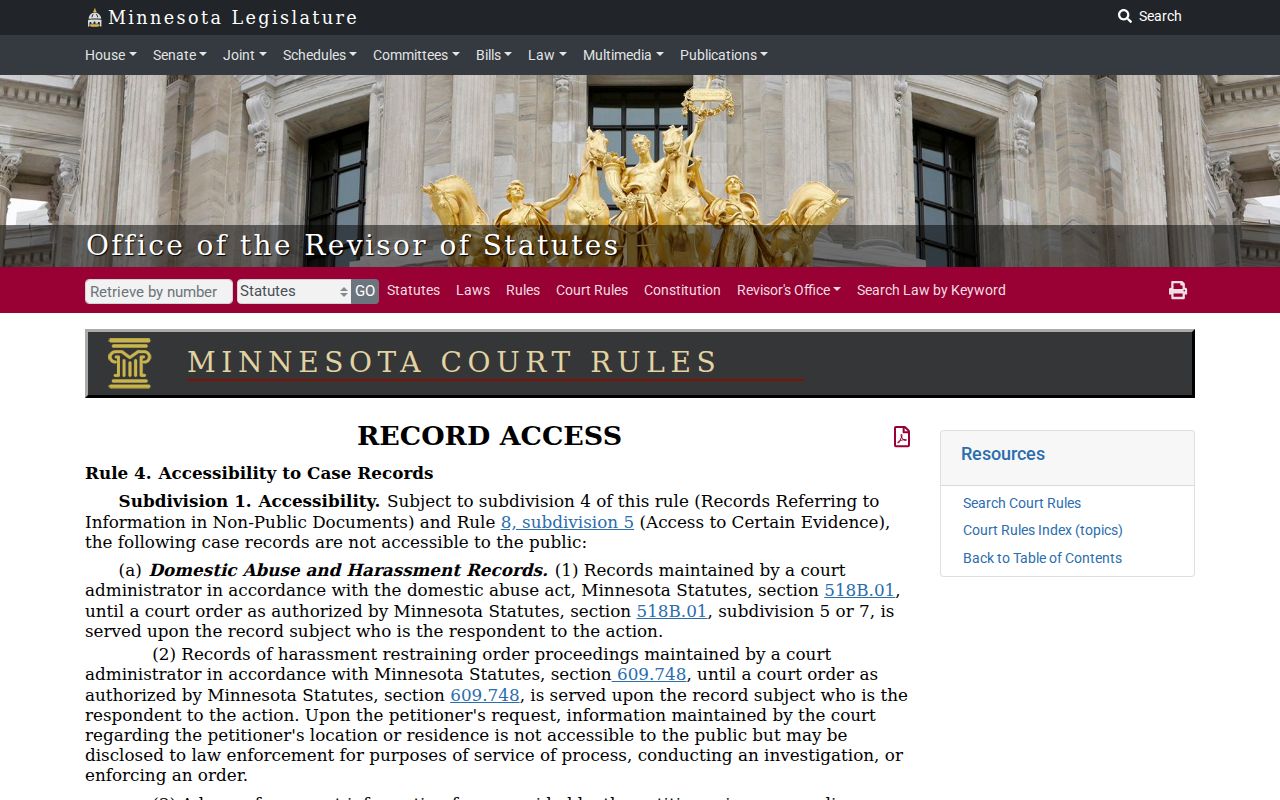
Whatever fee eligibility suggests, Rule 4 still governs the record itself. Its public-access categories decide whether a Wabasha civil record can be copied or inspected at all.
Civil Docket Access Rules
Court records in Minnesota answer to the Supreme Court's access rules. They do not answer to the usual Government Data Practices Act framework. Minn. Stat. § 13.90 sends judicial-record access to those court rules. From there, Minn. R. Pub. Access 8 governs inspection, copies, remote access, excluded data, and restricted categories. Rule 4 sorts records into public and non-public.
Access point: The court can permit inspection of a public record at the custodian during regular hours. Remote MCRO access, a courthouse terminal, and a certified copy request are separate channels with different limits.
When a Wabasha civil record is not online, you still have options. Use the courthouse terminal or counter, call Court Administration, or mail a specific request. A city office will not have it. Neither will a separate local court record. An appellate file will not work either, since those do not hold the Wabasha District Court case.
Wabasha Civil Court Channels
Each route into a Wabasha civil docket serves its own job. MCRO offers statewide Case, Document, Hearing, and Judgment Search. The Wabasha weekly calendar verifies current public settings. The courthouse counter and terminal handle public inspection and local records. For case-specific availability and official copies, Court Administration at (651) 412-8627 is the contact. Mail suits a specific records request; eFile and eServe exists for party filing and service.
Appeals live elsewhere. An appeal sits in the Minnesota Court of Appeals record system through P-MACS. It does not sit in a Wabasha trial-court search. A federal civil matter belongs in PACER. No separate municipal trial-court civil portal operates in Wabasha County. The takeaway is simple. Match the court location and case number to the right record system before reading anything into a search result.
The Minnesota judiciary access statute sets out this court-rule structure.
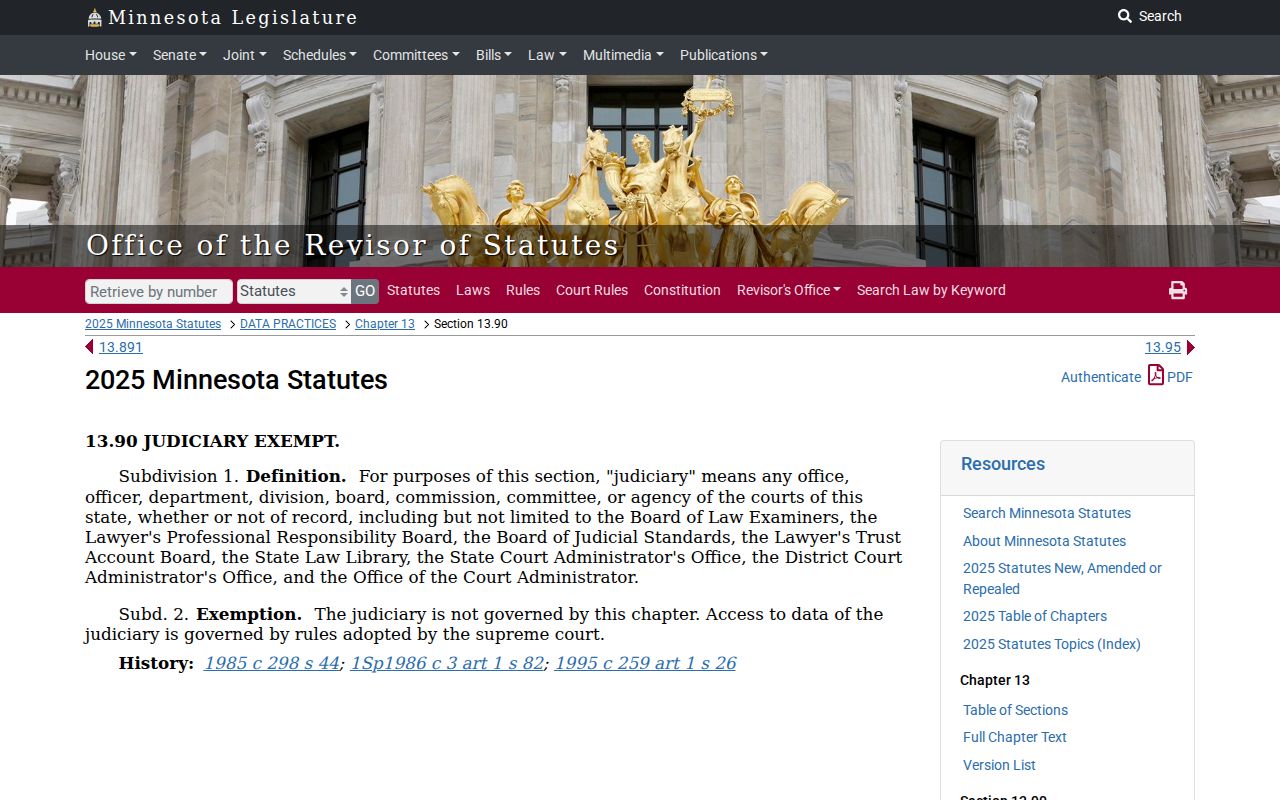
That statute is why Wabasha County civil docket access follows Judicial Branch rules rather than a routine data-practices request timetable. The official expungement statute supplies the sealing context.
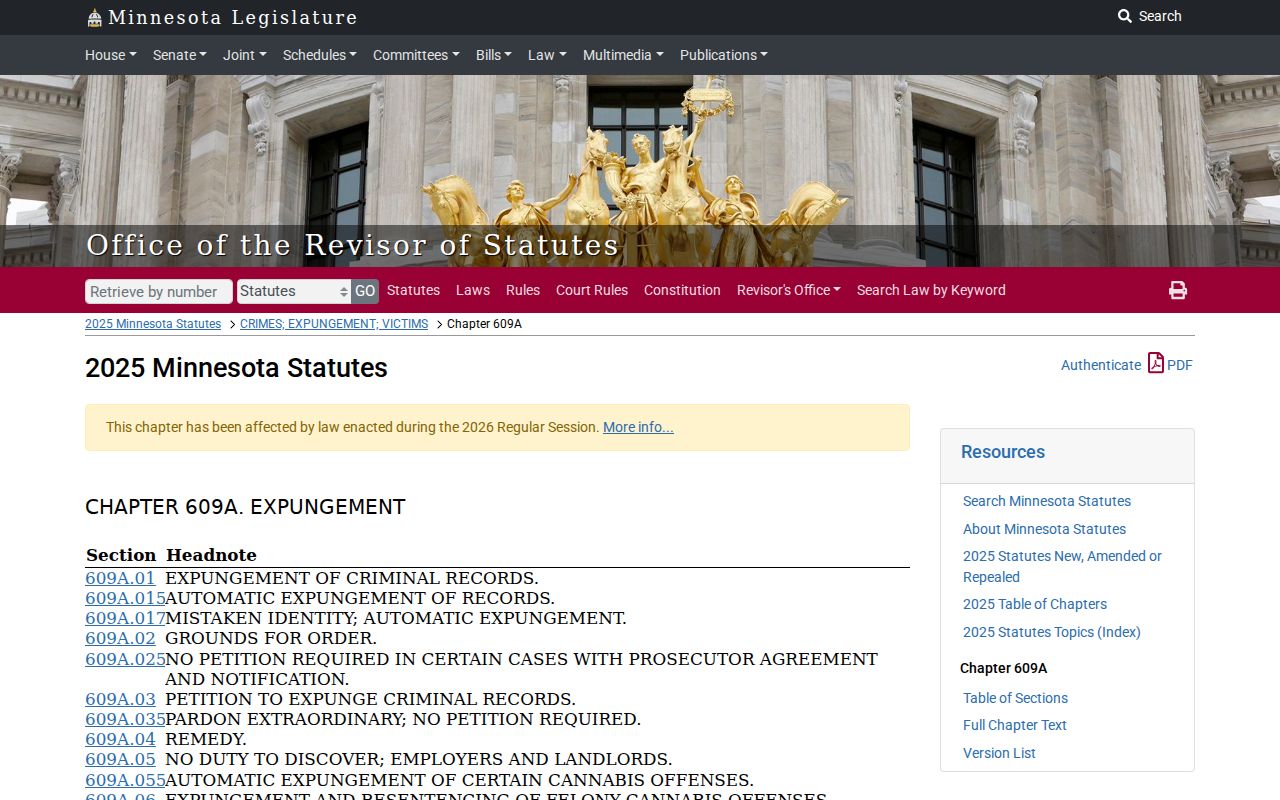
Sealing closes off one particular Wabasha court record. It does not create a way around the court's established request path.